

Industrial Equipment
Your Professional Industrial Equipment Supplier!
EO EQUIPMENT is a global supplier of high-quality industrial machinery and equipment, providing comprehensive solutions across construction, cleaning, machine tools, food processing, and packaging sectors. Backed by over 20 years of sourcing and export experience, we connect international buyers with trusted Chinese manufacturers to deliver efficient, customized solutions.


Our Best-Selling Industrial Equipment
Our Company Has More Products to Offer, Please Browse the Product Categories on the Website, If You Have Any Needs, Please Contact Us.
Material Handling Equipment
Material handling equipment refers to any tools, equipment, machinery, vehicles, appliances, and other devices that are used in commercial settings to move, lift, store, and manage materials. For instance, a large warehouse for a big box retailer would need material handling equipment on a daily basis to move items around the warehouse, organize inventory, prepare boxes for shipments, etc.
General Machinery
General Machinery refers to a broad category of industrial machines that are used across many industries rather than being designed for one specific product or process. General machinery includes standard-purpose equipment that supports manufacturing, processing, and industrial operations, such as power supply, cooling, air compression, and material movement.
Photolithography Machine
A photolithography machine is an ultra-precise device in chip manufacturing that uses light (often extreme ultraviolet, or EUV) to print microscopic circuit patterns from a photomask (stencil) onto a silicon wafer coated with light-sensitive photoresist, similar to a camera, allowing for the creation of billions of transistors for modern electronics.

Material Handling Equipment Specification
|
Specification |
Details |
|
Equipment Type |
Material Handling Equipment |
|
Belt Material |
Food-grade PVC, PU, PE, or TPU options |
|
Compliance Standards |
FDA, USDA, EU food contact safety standards |
|
Belt Width Range |
Approx. 100 mm – 2400 mm (customizable) |
|
Belt Thickness |
Approx. 0.8 mm – 5 mm (material dependent) |
|
Operating Temperature Range |
Approx. –10 °C to +80 °C |
|
Tensile Strength |
Designed for reliable product transport |
|
Surface Finish |
Smooth, non-porous, easy-to-clean surface |
|
Resistance Properties |
Oil, fat, moisture, and chemical resistance |
|
Hygiene Features |
Wash-down compatible with minimal crevices |
|
Application |
Food handling in processing and packaging |
Advantages of Material Handling Equipment
Increase productivity
Material handling equipment can help speed up loading, unloading, and transportation.
Improve safety
The right material handling equipment can improve safety by reducing the need for manual lifting.
Optimise storage space
Businesses can optimise their warehouse storage space with materials handling equipment.
Reduce costs
Materials handling equipment can help reduce costs by cutting waste and preventing product damage.
Material Handling Equipment Types
|
Category |
Description |
Examples |
|
Storage and Handling Equipment |
Equipment designed to hold materials awaiting next production or delivery steps. |
Pallet racks, stacking frames, shelves, storage racks, bins and drawers, mezzanines |
|
Industrial Trucks |
Motorized and manual trucks used to transport materials within a facility or job site. |
Forklifts, order pickers, pallet jacks, walkie stackers, platform trucks, sideloaders, hand trucks |
|
Bulk Material Handling Equipment |
Equipment for handling large volumes of loose or bulk materials, often outdoors or semi-outdoors. |
Conveyor belts, stackers, reclaimers, bucket elevators, grain elevators, hoppers, silos |
|
Engineered Systems |
Automated and integrated systems for efficient storage and transport with minimal manual input. |
Automated Storage and Retrieval Systems (AS/RS), automated guided vehicles (AGVs), robotic delivery systems, sortation systems, palletizers |

The importance of material handling equipment lies in its ability to improve operational efficiency, enhance workplace safety, and reduce labor costs within manufacturing and logistics environments. By mechanizing the movement, storage, and control of materials, this equipment minimizes manual handling, thereby decreasing the risk of injuries and fatigue among workers. Efficient material handling systems also streamline workflow processes, reduce product damage, and optimize space utilization, contributing to faster production cycles and lower operational expenses. Proper selection and use of material handling equipment are essential for maintaining productivity and meeting industry safety standards.
Agriculture
Hoopers and grain elevators are popular material-handling equipment in the agriculture industry. It helps to move materials like seeds, crops, and fertilizer from one place to another.
Construction
Many construction companies need heavy materials to be loaded and moved at the project's site. They use equipment like aerial lifts and forklifts to move and store products.
Distribution
This industry depends on material handling tools to move final products before delivery. It uses equipment like stackers and AGVS (Automated Guided Vehicle Systems).
Warehousing
Businesses that use warehouses need handling equipment to store and move materials. This industry uses tools like reach trucks and stackers for better productivity.
Manufacturing
This industry is dependent on material handling equipment. Some manufacturing material handling equipment is pallet trucks, AGVs, and forklifts.
Photolithography Machine Specification
|
Specification |
Details |
|
Machine Type |
Photolithography Machine |
|
Exposure Method |
UV Light Exposure (LED or Mercury vapour) |
|
Exposure Area |
600 × 700 mm – 5000 × 1200 mm (model dependent) |
|
Resolution / Precision |
Typically 50–100 µm or better |
|
Alignment System |
Automatic or manual alignment systems |
|
Light Source |
UV LED or traditional UV lamps |
|
Control System |
PLC or computer-controlled interface |
|
Power Supply |
Standard industrial voltage (e.g., 380 V / 220 V) |
|
Cooling System |
Forced air or water cooling |
|
Machine Dimensions |
Varies by model and working size |
|
Machine Weight |
Approx. 800–3000 kg (varies by model) |
|
Construction Material |
Industrial-grade steel frame |
|
Applicable Substrate |
PCB panels and dry film panels |
Advantages of Photolithography Machine
High Precision and Accuracy
Precision machined parts ensure that photolithography machine can achieve the extremely tight tolerances required for semiconductor patterning.
Complex Geometries
Many components of photolithography machine have complex shapes and fine features that require advanced machining techniques.
Consistency and Repeatability
Precision machining provides consistent and repeatable results, producing identical parts across large production runs.
Surface Finish Quality
High-quality surface finishes are essential for optical components to reduce light scattering and improve pattern resolution.
Substrate Cleaning: The substrate (typically a silicon wafer) is cleaned to eliminate pollutants.
Photoresist Covering: A slight layer of photoresist is turned covered onto the substrate, making an even surface.
Soft Bake: In order to eliminate solvent and guarantee uniformity, the coated substrate is gently heated.
Mask Alignment: Over the substrate, a photomask with the desired pattern is aligned.
Exposure: UV light is radiated through the veil onto the photoresist, causing a substance change.


Post-Exposure Bake: The substrate is warmed again to balance out the example in the photoresist.
Development: Using a developer solution, the exposed photoresist is removed, revealing the pattern.
Hard Bake: The remaining photoresist is made more durable by performing a final heating step.
Etching or Implantation: The uncovered substrate regions are carved or adjusted depending on the situation.
Photoresist Stripping: The patterned substrate is left behind after the remaining photoresist is removed.
Applications of Photolithography Machine
Semi-conductor Manufacturing
Photolithography machine is important for creating components on computer chips.
Electronics
It is used in making small sensors, phone screens, and other electronic components.
Circuit Boards
It helps to define pathways for electricity in circuit boards.
Optics
It is used in the production of lenses and optical devices.
Medical Devices
Scientists use it to create tiny medical devices for tests and treatments.
Nanotechnology
Sometimes it is used for working with extremely small structures in nanotechnology.
Customized Services
To better meet the diverse needs of different industries and clients, we can customize professional construction machinery solutions based on your specific application scenarios and special requirements. For further information or support, please feel free to contact us.
- Contact Customer Service
- Submit Order
- Obtain a Quote
- Confirm Order
- Arrange Payment
- Track Order
- Receive and Inspect Goods

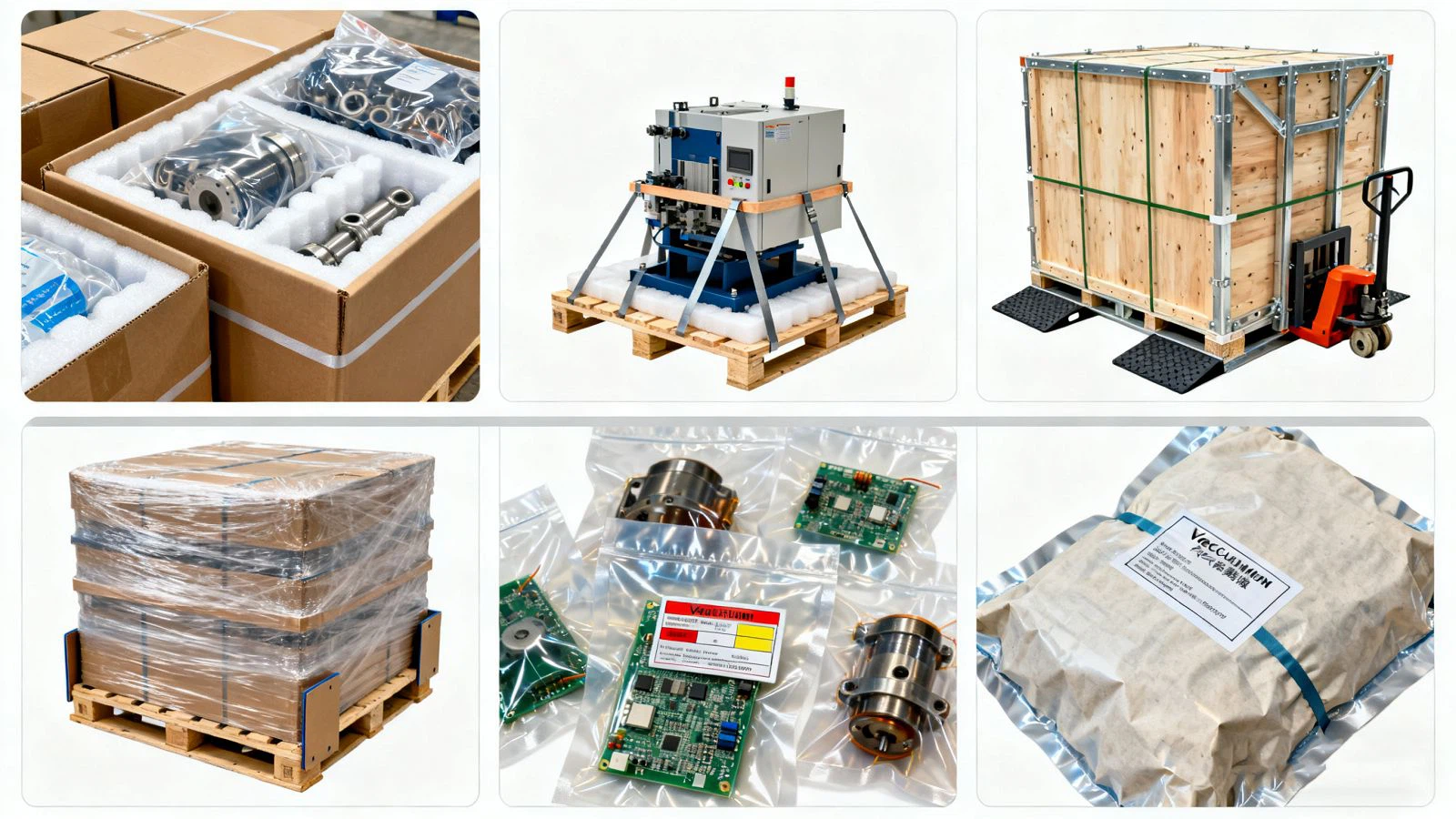
Packaging
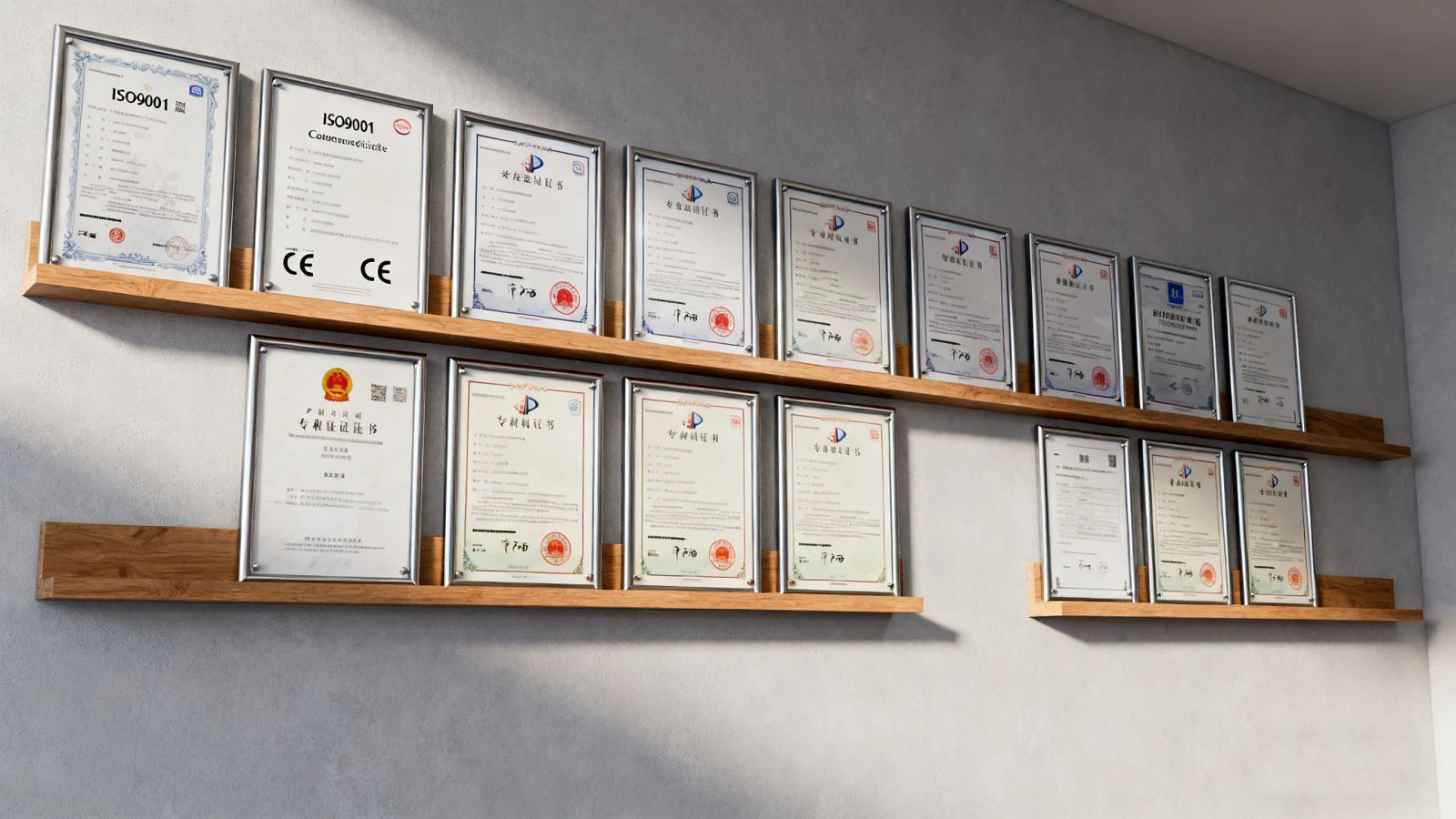
Our Certificate
FAQ
As one of the most reliable industrial equipment manufacturers and suppliers in China, we offer a wide range of products with superior quality. Please rest assured to buy high-grade industrial equipment made in China here from our factory. Browse our website now.